ARTIFICIAL INTELLIGENCE
DEFINITION
Artificial intelligence (AI) is the facsimile of human intelligence processes by
machines which are programmed to think like humans and mimic on their actions,
especially on the computer network. These processes include learning (the
information process and the rules using for it), reasoning (using rules to
reach approximate or definite conclusions), self-correction(if the conclusions
gets any error then the rules are inbuilt to problem solving).
ALGORITHM
An algorithm is a fixed of unambiguous commands that a mechanical laptop can execute. A complicated algorithm is regularly constructed on pinnacle of different, simpler, algorithms. Many AI algorithms are able to mastering from information; they are able to beautify themselves through getting to know new method or can themselves write other algorithms.
Bayesian networks, selection trees, and
nearest-neighbor, could theoretically, (given endless information, time, and
memory) learn how to approximate any function, inclusive of which mixture of
mathematical functions. A easy instance of an algorithm is the
subsequent sport like tic-tac-toe.
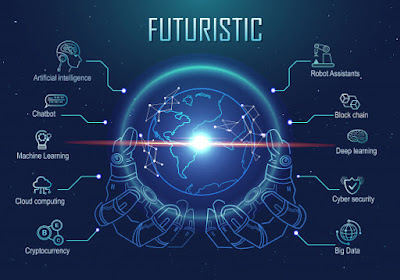
Artificial Intelligence in future

Artificial Intelligence in future
RIDESHARING APP LIKE UBER
How do they determine the price of your trip? How do they
lessen the wait time after you hail a automobile? How do the ones services
optimally fit your needs with other passengers to lessen detours? The method to
most of those questions is Machine
Learning.
Engineering Lead for Uber
ATC Jeff Schneider mentioned in an NPR interview how the
enterprise makes use of Machine Learning to predict rider call for
to make sure that “surge pricing” will speedy now not be essential. Uber’s Head
of Machine Learning Danny Lange confirmed
Uber’s use of system studying for ETAs for rides, expected meal delivery times
on UberEATS, computing
most acceptable pickup places, further to for fraud detection
 |
Uber ridesharing using Machine Learning |
